
Connecting your ERP to a new booking platform sounds simple: you have an API, the vendor has an API—plug them in, job done.
In reality, integration projects don’t stall because of complex code. They drag on because no one agreed on the business logic before the developers started typing.
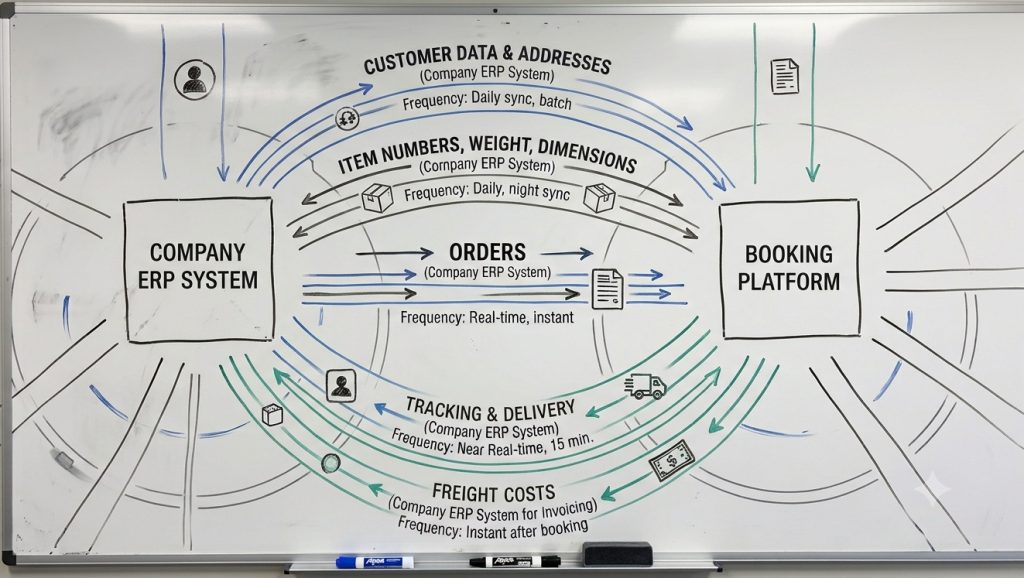
Want to ship in three weeks instead of three months? Get these five decisions sorted first:
- What actually needs to be integrated? Avoid the “let’s sync everything” trap. Rule of thumb: only integrate flows done manually more than 20 times a week or where human error costs real money. For the rest, a basic export works fine.
- When should data flow? Real-time sounds great, but it adds cost and complexity. Master data can sync overnight. Save real-time for things that genuinely can’t wait—like live bookings.
- Who owns the truth? If a customer updates their address in the ERP while an employee books a shipment using the old address on the platform—who wins? Decide which system is the master and which is the replica, or developers will just take a wild guess.
- What happens to historical data? Keep it simple and draw a line in the sand. Run new bookings in the new platform and keep view-only access to the old system during a brief transition. Full data migration is pricey and rarely worth it.
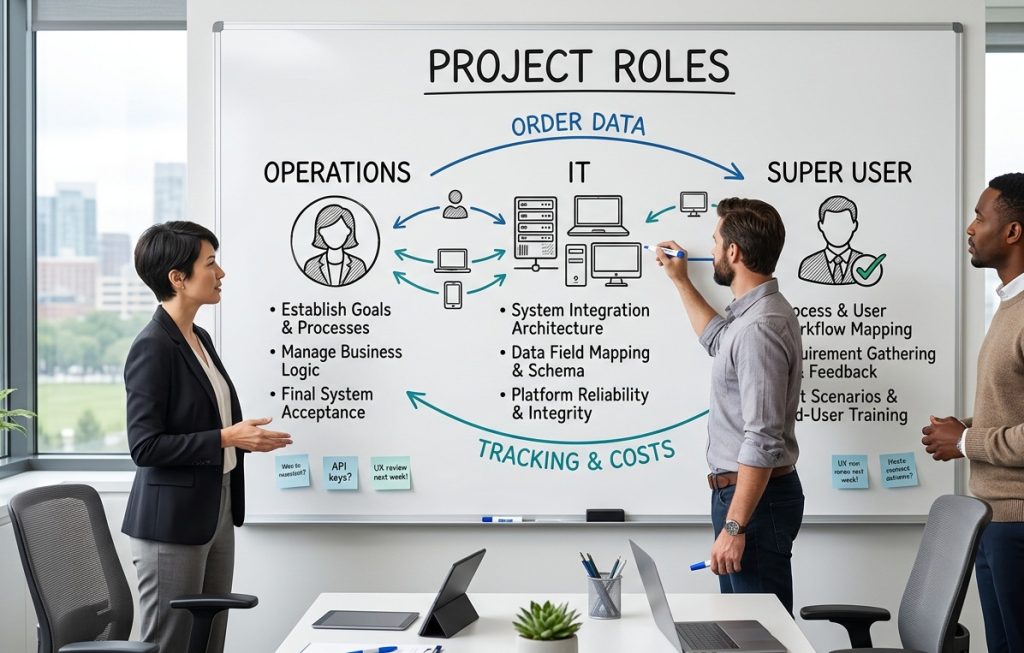
- Do you have the right team? You need three internal roles: a decision-maker from ops (who can call the shots without calling a meeting), an IT lead (who knows where the ERP bodies are buried), and a super-user (who actually uses the software daily).
Realistic Timeline For a mid-sized setup, count on 6 to 12 weeks. Coding only takes about a third of that time—the rest goes to alignment, testing, and parallel runs. If a vendor promises a 3-week turnaround without seeing your ERP setup first, consider that a giant red flag.
FAQ
Build in-house or use the vendor? A hybrid approach works best: your team handles the ERP side, and the vendor manages their platform integration.
What does it cost? Cost is driven by how many edge cases you want to handle, not the API code itself. Keep the scope tight to keep the invoice low.
What if our ERP is legacy or custom? Budget more time for discovery. Older systems rely heavily on undocumented quirks, so bring in the developer who knows the system best right away.
Integrations succeed when ops and IT set the ground rules early. Do the homework upfront, and the project will actually land on time and on budget.

